Commercial Generator Installation in New Jersey – What to Look for in a Certified Provider?
Serving Newark, Jersey City, Hoboken, Parsippany & All of New Jersey | National Standby Repair
When the power goes out, your business cannot afford to wait. For facility managers, commercial property owners, and operations teams across New Jersey a properly installed standby generator is the difference between continuity and costly downtime.
But not every generator installation is equal. The right provider brings more than equipment, they bring certified expertise, New Jersey regulatory knowledge, and long-term service accountability. This guide walks you through exactly what to look for when selecting a commercial generator installation company in New Jersey, and why National Standby Repair (NSR) has been the trusted choice since 1981.
Why Commercial Generator Installation in New Jersey Requires a Specialist
New Jersey’s commercial landscape creates unique power reliability challenges. The state’s dense urban infrastructure, aging grid segments, frequent nor’easter weather events, and strict municipal building codes combine to make standby power not just advisable, but essential for most commercial operations.
Unlike a residential generator swap, commercial installations involve:
- Complex load calculations across multiple circuits and building systems
- NJ Department of Community Affairs (DCA) permit and inspection requirements
- Automatic transfer switch (ATS) compliance with NEC and local utility interconnection rules
- Fuel system design, natural gas line sizing or diesel tank placement and secondary containment
- Coordination with NJ utility companies for utility-side disconnects
A general electrical contractor may handle residential work competently, but commercial standby power demands a provider with dedicated generator expertise, and the certifications to back it up.
7 Criteria for Choosing a Commercial Generator Installation Provider in New Jersey
Use this checklist when evaluating any commercial generator installation company in NJ:
1. Factory Certification with Major Generator Brands
Factory certification means the manufacturer has trained and authorized the technician to install, configure, and service their specific equipment. This matters because each generator brand, Kohler, Generac, Cummins, Briggs & Stratton, Winco, has proprietary control systems, warranty requirements, and torque/commissioning specifications.
What to ask: “Which generator brands are you factory-certified to install and service? Can you show documentation?” A certified dealer can also provide manufacturer-backed warranties on parts and labor.
2. EGSA Certification ,The Industry Gold Standard
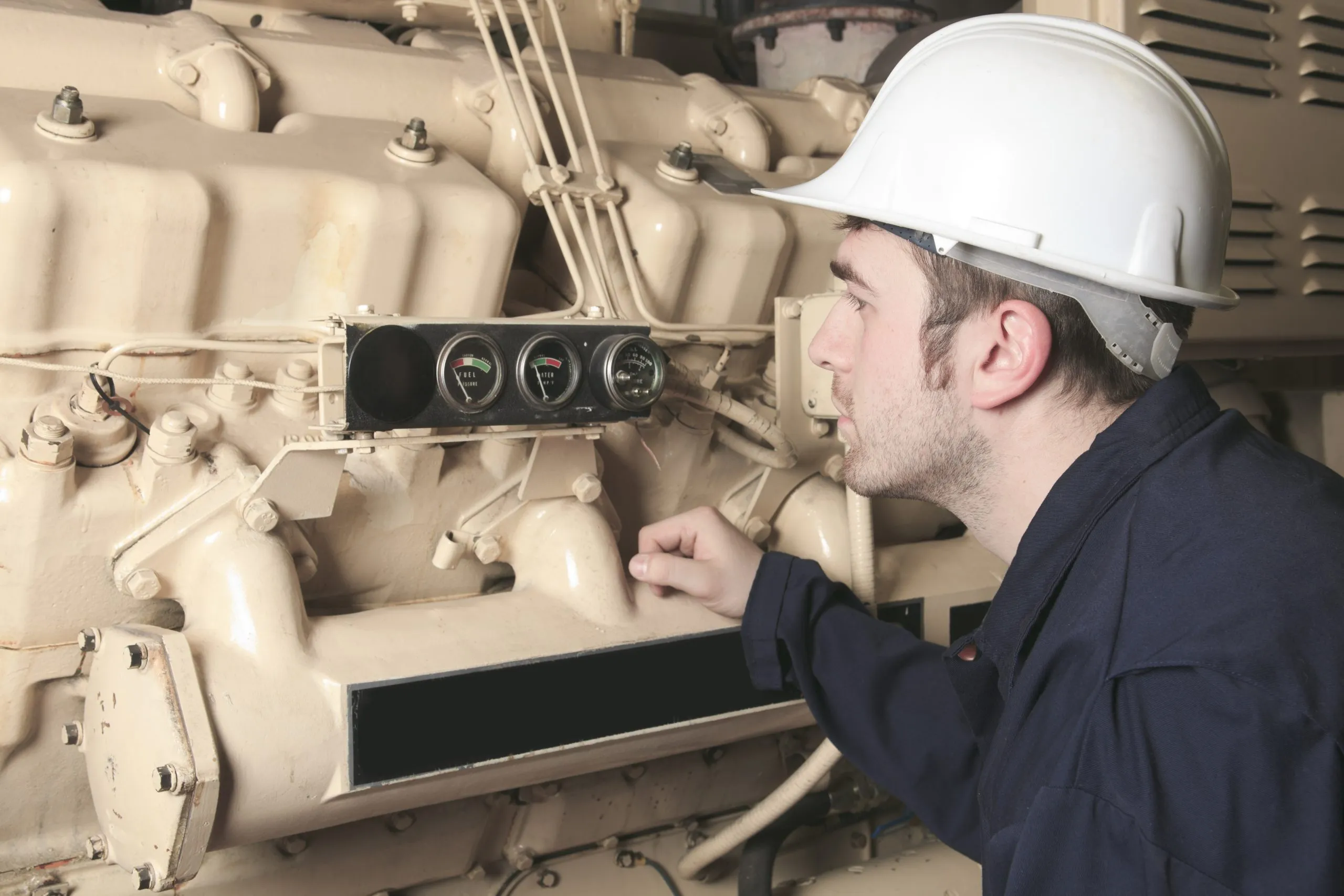
The Electrical Generating Systems Association (EGSA) offers the most rigorous credentialing program in the standby power industry. EGSA-certified technicians have demonstrated mastery of electrical systems, generator mechanics, control systems, and safety protocols across real-world commercial applications.
Why it matters: Unlike a basic electrician’s license, EGSA certification is specific to power generation, meaning your technician has hands-on training in the exact equipment being installed at your facility.
3. Proper Load Sizing for Your Commercial Building
Undersized generators overload and fail under stress. Oversized generators waste capital and may short-cycle, shortening engine life. Proper commercial load sizing is a calculated engineering process, not a rough estimate.
A certified NJ provider should conduct:
- A full electrical load analysis of all critical and non-critical circuits
- Starting load vs. running load assessment (motors and HVAC have high inrush currents)
- Future load growth planning
- Harmonic distortion analysis for facilities with sensitive electronics or data centers
For commercial properties in Newark or Jersey City with older electrical infrastructure, load assessment is especially critical before specifying generator size.
4. Full NJ Permit Management and Code Compliance
Commercial generator installations in New Jersey require permits from your local municipality under the NJ Uniform Construction Code (UCC), overseen by the DCA.
Additional approvals may be required from your local fire subcode official, zoning board, and utility company.
Typical NJ commercial generator permits include:
- Electrical subcode permit
- Mechanical subcode permit (for fuel systems and exhaust)
- Plumbing subcode permit (if natural gas connections are involved)
- Zoning variance or site plan approval (for outdoor units and fuel tanks)
- NJDEP air quality permit for larger diesel generators (>500 kW in many counties)
Red flag: Any contractor who says permits are “optional” or “the owner’s responsibility” for a commercial installation should be disqualified immediately.
5. Transfer Switch Expertise and NEC Compliance
The automatic transfer switch (ATS) is the brain of your standby power system. It monitors utility power, detects an outage, and seamlessly transfers your building’s electrical load to generator power, typically within 10 to 30 seconds.
For NJ commercial installations, the ATS must comply with:
- NEC Article 700 (Emergency Systems), Article 701 (Legally Required Standby), or Article 702 (Optional Standby) ,depending on your building type
- NFPA 110 for critical facilities (hospitals, data centers, life safety systems)
- Local utility interconnection requirements (PSE&G, JCP&L, Rockland Electric)
Open-transition, closed-transition, and soft-loading transfer switches each have different applications. Your provider should recommend the right type for your facility’s sensitivity requirements.
6. Fuel Type Selection: Natural Gas vs. Diesel for NJ Commercial Buildings
Fuel choice is one of the most consequential decisions in commercial generator specification, and the right answer depends on your facility’s location, utility access, runtime requirements, and environmental regulations.
| Factor | Natural Gas | Diesel |
|---|---|---|
| Fuel Storage | No on-site storage needed (utility supply) | On-site tank required; secondary containment per NJ regs |
| Runtime | Unlimited (as long as utility gas flows) | Limited to tank capacity (typ. 24–96 hours) |
| Cold-Weather Start | Excellent | Requires block heaters; gelling risk below 10°F |
| NJ Environmental | Lower emissions; fewer NJDEP restrictions | NJDEP air permits may apply for >500 kW |
| Best For | Urban/suburban facilities with natural gas access (Newark, Hoboken, JC) | Large industrial loads; rural sites without gas access |
| Fuel Cost | Stable utility rate | Market-variable; storage/delivery costs apply |
NSR’s certified engineers can perform a fuel feasibility study for your NJ location to determine the optimal fuel solution before any equipment is specified.
7. Long-Term Service Capability and Preventive Maintenance Programs
A generator that is installed and never maintained is a liability, not an asset. NJ commercial facilities should require any installation provider to offer, and ideally, already service, a documented preventive maintenance (PM) program.
A credible PM program should include:
- Monthly, quarterly, and annual service intervals with documented load bank testing
- Fluid analysis (oil, coolant) to predict component wear
- Transfer switch exercising and contact inspection
- 24/7 emergency service response, not just business hours
- NFPA 110 compliance documentation for regulated facilities
Why NJ Businesses Choose National Standby Repair
National Standby Repair has specialized exclusively in standby power systems since 1981, over four decades serving commercial, industrial, and institutional clients across New Jersey and the tri-state area. Here’s what sets NSR apart:
| Factory-Certified for All Major Brands | NSR technicians are factory-authorized for Kohler, Generac, Cummins, Briggs & Stratton, and Winco, giving you certified expertise regardless of the equipment specified for your project. |
|---|---|
| EGSA-Certified Technicians | Every NSR field technician holds EGSA certification, the highest standard in the power generation industry. This isn’t a corporate badge, it’s individual technician credentialing. |
| NJ Permit & Code Expertise Since 1981 | With decades of installations across Newark, Jersey City, Hoboken, Parsippany, and statewide, NSR knows every municipality’s permit process, inspector preferences, and common code pitfalls, saving you time and preventing costly re-work. |
| Full Fuel System Design | NSR designs and installs natural gas piping, diesel fuel systems with NJ-compliant secondary containment, and propane installations, handling everything from the generator connection back to the source. |
| Transfer Switch Sales, Installation & Service | NSR installs and services the full range of ATS configurations across all capacity ranges, ensuring NEC Article 700/701/702 compliance for your specific building classification. |
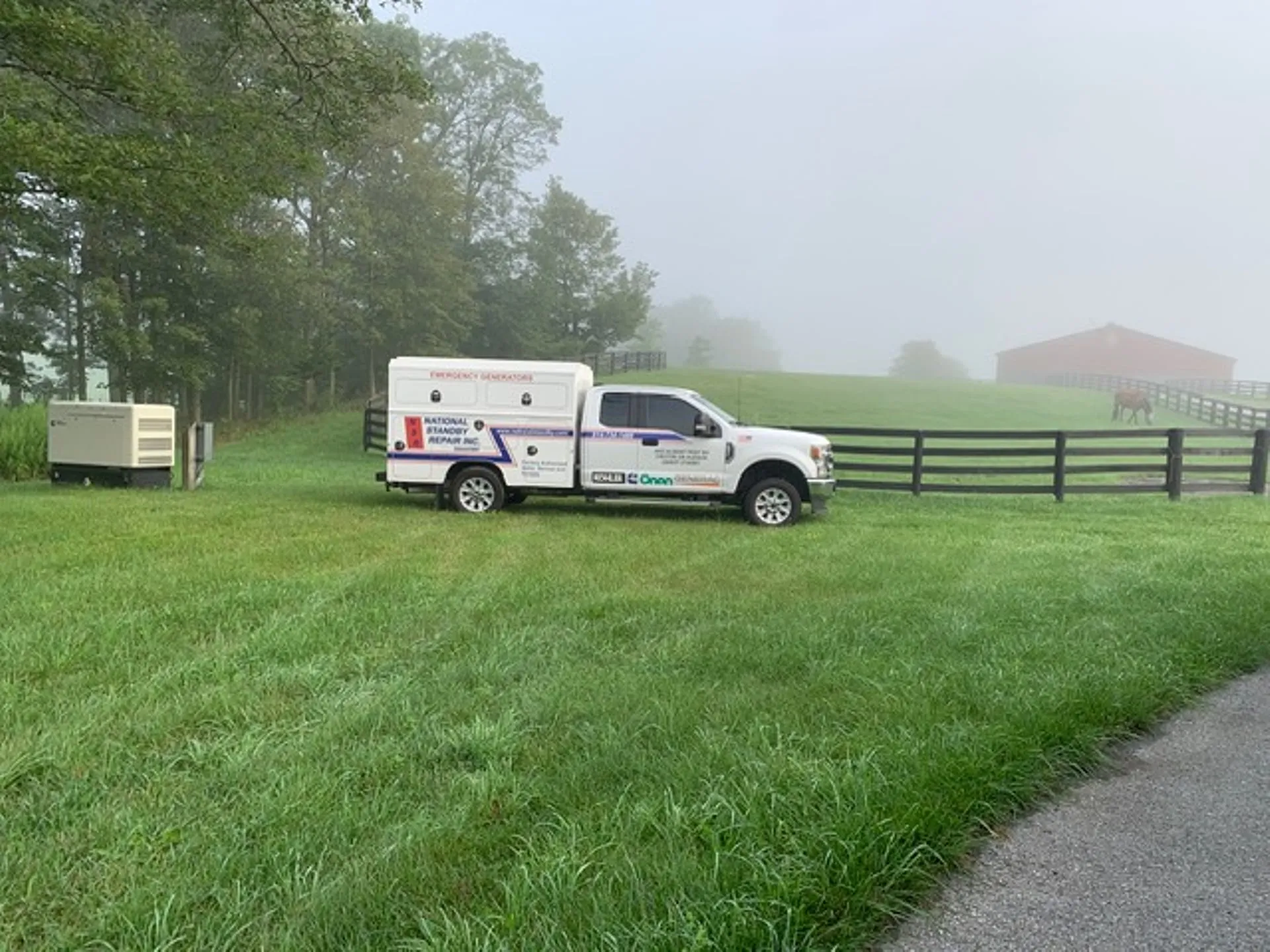
| 24/7 Emergency Service | Outages don’t keep business hours. NSR provides around-the-clock emergency response throughout New Jersey, backed by fully stocked service vehicles and a deep parts inventory for all supported brands. |
Commercial Generator Installation Across New Jersey
NSR serves commercial clients throughout New Jersey, with specialized knowledge of local permit offices, utility interconnection requirements, and site conditions in key NJ markets:
Newark, NJ
As NJ’s largest city, Newark presents dense urban installation challenges including limited staging space, tight electrical rooms, and coordination with PSE&G for utility-side work. NSR’s Newark experience spans hospitals, warehouses, commercial office buildings, and municipal facilities.
Jersey City, NJ
Jersey City’s rapidly expanding commercial and mixed-use development market requires generators sized for modern high-density buildings. NSR works with Jersey City’s construction code office and JCP&L to streamline the permit and interconnection process.
Hoboken, NJ
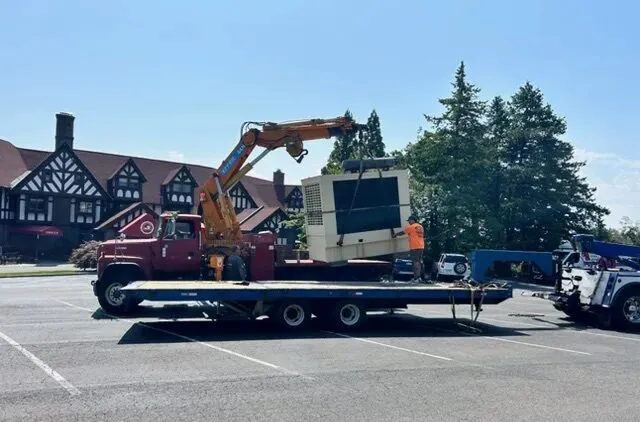
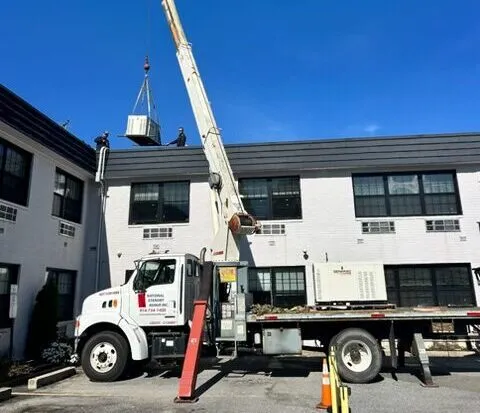
Hoboken’s tight urban grid and historic building stock create unique generator placement challenges. NSR specializes in rooftop placements, sound attenuation requirements, and retrofit installations in buildings with limited mechanical room space.
Parsippany, NJ
Parsippany’s corporate park corridor houses major data centers, pharmaceutical facilities, and corporate campuses with complex power reliability requirements. NSR serves this market with large-scale generator systems, N+1 redundancy configurations, and NFPA 110-compliant installations.
NSR also serves Essex County, Bergen County, Hudson County, Morris County, Union County, Middlesex County, and commercial clients throughout all of New Jersey.
Ready to Specify a Commercial Generator for Your New Jersey Facility?
National Standby Repair brings over 40 years of certified commercial generator installation experience to every project in New Jersey. From initial load sizing and fuel system design through permit management, installation, commissioning, and ongoing maintenance, NSR is the single-source standby power partner your facility deserves.
Contact NSR today to schedule a commercial power assessment for your Newark, Jersey City, Hoboken, Parsippany, or New Jersey facility.
Factory-Certified | EGSA-Certified Technicians | Serving NJ Since 1981